MOVE Mobility


Tag Archive: Knowledge transfer

  1. Sustainable Cycling Infrastructure for Livingstone

    Comments Off on Sustainable Cycling Infrastructure for Livingstone

    Project Overview

    The Ministry of Tourism, in partnership with the Livingstone City Council, has commissioned this assignment under the World Bank–financed Zambia Green, Resilient and Transformational Tourism Development Project (GREAT‑TDP). The project aims to design a comprehensive, safe, and interconnected cycle lane network that enhances mobility for all users—local commuters, students, and both domestic and international tourists.

    This initiative supports Livingstone’s ambition to become a model city for sustainable urban mobility, reducing congestion, improving safety, and strengthening its position as Zambia’s tourism capital.

    Scope of Work

    The assignment extends beyond physical infrastructure design and includes several strategic components:

    • Phased implementation plan supported by detailed cost estimates and investment priorities
    • Design of an integrated bike‑sharing system, aligned with Livingstone’s broader transport and tourism ecosystem
    • Capacity‑building programmes to strengthen the skills of local engineers, planners, and municipal staff
    • Sustainable mobility recommendations that align with national climate goals and international best practices
    • Tourism‑focused mobility enhancements, ensuring seamless access to major attractions such as Victoria Falls

     Context and Vision

    Livingstone faces a unique mobility challenge: balancing the daily transport needs of residents with the high volume of tourists visiting world‑renowned destinations. A modern cycling network offers a low‑carbon, inclusive, and resilient mobility solution that:

    • improves urban livability
    • enhances visitor experience
    • reduces traffic congestion
    • supports Zambia’s green growth agenda
    • strengthens the city’s identity as a sustainable tourism hub

    The project envisions a connected non‑motorized transport (NMT) system that integrates cycling with pedestrian routes, public transport, and tourism infrastructure.

    Project Team

    The study is being delivered by a Joint Venture between MOVE Mobility BV and Serefaco Consultants Ltd. The project officially commenced on 30 January in Lusaka, marking the start of a collaborative effort to shape Livingstone’s future mobility landscape.

  2. Scaling up SUMP Türkiye

    Comments Off on Scaling up SUMP Türkiye

    While the project’s main goal is to encourage the shift from individual transport to sustainable, accessible, and inclusive mobility options at both national and urban levels, it also has two specific objectives:

    • To support municipalities in strengthening their policy dialogue and capacity development processes in the field of sustainable urban mobility,
    • To promote the European Mobility Week (EMW) in Türkiye.

    MOVE Mobility has been supporting the Project through its experts, Volkan Recai Çetin (the Team Leader of the Project) and Veysel Sarıcı (Senior Transport Planning Expert in the Project). While Mr. Çetin was responsible for the overall implementation’s quality and supervised activities, Mr. Sarıcı was responsible in Green Policy Paper and White Policy Paper.

    • White Policy Paper: A strategic policy document that outlines Türkiye’s national objectives in the field of sustainable urban mobility based on current urban needs. With a 25-year vision, the White Paper aims to transform urban mobility systems into more livable, accessible, integrated, and climate-friendly structures. This transformation goes beyond technical interventions, incorporating necessary legal frameworks, institutional reforms, data-driven governance tools, and sustainable financing models. Aligned with the EU’s strategic direction, the White Paper offers a common reference framework for central and local authorities across all stages—from planning to implementation.
    • Green Policy Paper: Based on a detailed analysis of the current urban mobility conditions in Türkiye, this strategic document has been prepared with the participation of stakeholders and decision-makers. It provides a comprehensive review of existing policies, legislation, and the institutional framework, highlighting the misalignments between Türkiye’s and the EU’s sustainable mobility goals. At the same time, it identifies key issues, priorities, and potential opportunities for improvement.


  3. MOVE Mobility engages in ACTIVE Capacity Building in Uganda

    Comments Off on MOVE Mobility engages in ACTIVE Capacity Building in Uganda

    ACTIVE (Alliance for Cycling and Walking Towards International Vitality and Empowerment) unites leading stakeholders in the field of active mobility – walking and cycling – with one clear mission: to train 10,000 experts worldwide over the next ten years, empowering cities and regions to create healthier and more sustainable mobility systems.

    ACTIVE trainings help communities become more walk- and cycle-friendly by addressing three key areas: hardware (infrastructure), software (awareness and education), and orgware (institutional cooperation). Participants learn to identify good and bad examples of each in their region. The ultimate goal is to create safe, inclusive networks for walking and cycling—accessible to people of all ages and abilities, similar to those in the Netherlands.

    Shaping the future in Gulu and Kampala

    After kicking off in Jinja, we expanded the training sessions to Gulu and Kampala this September.

    We started the training in Gulu, a young city that earned its city status in 2020.

    Walking is already common and cycling is growing, yet often seen as transport for lower-income groups. Gulu’s leaders want to change that perception. Political and technical teams joined forces, showing strong determination to make active mobility a central part of the city’s growth. The energy during the training was contagious. Participants embraced the challenge, and the Mayor of Gulu set the tone by cycling during the city’s first car-free day—a clear sign that Gulu is ready to move forward.

    The training in Kampala, as well as in Gulu, focused on network planning and safe street design. Here, too, the training concluded with a graduation ceremony and a car-free day. Seeing Kampala’s streets come alive was truly uplifting! When we give space back to people walking and cycling, streets become places for people, not just for traffic. The cities’ joyful atmosphere was proof of that!


  4. Redesign of the Old Taxi Park in Kampala, Uganda

    Comments Off on Redesign of the Old Taxi Park in Kampala, Uganda

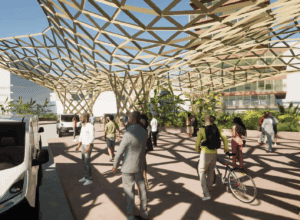
    DASUDA partners MOVE Mobility, VE-R, Studio Akeka, Rebel Group), with support of Movares and Prome Consultants redesigned the historic Old Taxi Park into a smart, inclusive transport hub – combining local insight with global expertise. From congestion to connection: discover how mobility, planning, finance, stakeholder involvement and knowledge exchange came together in Uganda’s capital.

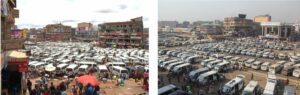
    The Old Taxi Park serves as a central hub for public transportation, mainly for 14-seater minibuses. Due to Kampala’s rapid urban growth and increasing demand for transport, the area suffers from constant congestion and a lack of adequate facilities. The project aims to address these issues by transforming the square into a future-proof central terminal, preserving its cultural value while improving its function in the city’s public transport network.

    The project was built around four main focus areas:

    Mobility: The mobility strategy followed a structured, multi-level approach – from broad vision to detailed design. The team focused on:

    • Optimization of public transport organization, terminals, routes, stops, and schedules
    • Use of advanced tools such as GIS data, the MOVE Meter, and VISSIM simulation software
    • Ensuring livability and practicality at every step of the process.

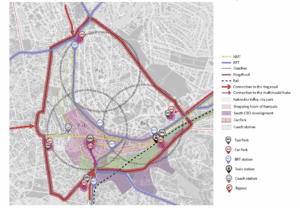
    Multi-modal system at city centre scale     

    Urban Planning: The team understands the site in its broader urban context and identified both constraints and opportunities. Through a stakeholder-oriented design process, various development options were explored and evaluated for feasibility and support.

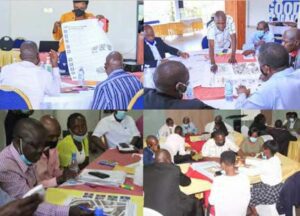
    Engaging stakeholders was a crucial part of the process. Collaboration included landowners, representatives of the taxi sector, vendors, commercial associations, the municipality, government bodies, and decision-makers, all contributing to a broadly supported and feasible solution.

    Financial Strategy: A strategy built on feasibility, bankability, and transit-oriented development.

    Stakeholder involvement and Knowledge Exchange: A “learning by doing” approach was key to the project, which functioned as a living lab:

    • Collaboration within the Stakeholder Platform
    • Core team preparation and evaluation sessions
    • A Knowledge Exchange Week in the Netherlands for sharing knowledge and best practices.

    Stakeholder involvement—from local vendors to government representatives—was essential in shaping a sustainable and future-proof public transport terminal in the heart of Kampala.


  5. MOVE Mobility’s contribution to SUMP Düzce

    Comments Off on MOVE Mobility’s contribution to SUMP Düzce

    Düzce SUMP is special because it is the only non-metropolitan municipality in Türkiye with such a plan, underlining its pioneering spirit in sustainable mobility planning.

    This strategic plan focuses on putting people and their basic needs first, thus contributing to a higher quality of life in the city. The plan is continuously evaluated and adapted to respond to current mobility trends, making it a dynamic and forward-looking tool.


    Modelling with support of the Move Meter

    MOVE Mobility supported the modelling process with our Move Meter tool. We provided training sessions in which participants learned about the operation, functionalities and practical applications of the software. Through interactive sessions, we ensured a better understanding of the traffic model by the local traffic engineers, enabling them to independently substantiate any adjustments to the plans.


    Integrated networks

    The plan takes into account all modes and forms of transport, both motorised and non-motorised. The main networks for public transport, cycling and cars are designed as part of an integrated system rather than separately, through an iterative process. This approach ensures that all transport modes fit together seamlessly.

    EU financiering

    The process of developing and implementing a SUMP is part of developing EU legislation for cities. This project is therefore financed by the EU as part of the process of adapting Turkish legislation in this field to the European standards been applied in many areas across Europe (and worldwide).


  6. Düzce Sustainable Urban Mobility Plan

    Comments Off on Düzce Sustainable Urban Mobility Plan

    Düzce Sustainable Urban Mobility Plan is a strategic plan to meet the mobility needs of citizens and the business environment in order to provide a better quality of life. Düzce SUMP will provide a useful tool for addressing urban transport issues as well as achieving local and higher-level environmental, social, and economic goals. Düzce SUMP will focus on people and how to meet their basic mobility needs in a sustainable way. Besides, it is also needed to include all modes (public, private, passenger, freight, etc.) and forms (motorized and non-motorized) of transport. In addition, it will be constantly monitored as a dynamic plan and updated with common sense to convert current mobility trends into sustainable trends.

    Düzce SUMP is unique in Türkiye, as Düzce is the only non-metropolitan municipality in the country undertaking a SUMP, showcasing its pioneering spirit in urban mobility planning.

    Kick-off meeting

    The kick-off meeting of the Düzce Sustainable Urban Mobility Plan (SUMP) Project, financed by the European Union and the Republic of Türkiye took place on October 9, 2023. Authority for the project is the T.R. Ministry of Transport and Infrastructure, and the end recipient is Düzce Municipality.

    A total of 31 individuals took part in the meeting. Representatives from various organizations, including the Ministry of Transport and Infrastructure, the European Union Delegation to Türkiye, Düzce Municipality, Sistem Global, WRI Türkiye, LuxMobility, Palye Teknoloji, Goudappel, and the Technical Assistance Team (TAT).

    Opening Ceremony

    The opening ceremony of the Düzce Sustainable Urban Mobility Plan (SUMP) Project, implemented under the Transport Sectoral Operational Programme in the second period of the EU’s Instrument for Pre-Accession Assistance (IPA), was held on 8 January 2024 in Düzce. The event brought together key stakeholders, including representatives from the Ministry of Transport and Infrastructure, the EU Delegation to Türkiye, and local authorities.

    During the ceremony, the importance of urban mobility planning for sustainable development and disaster resilience was highlighted. It was emphasized that Düzce serves as an exemplary model for other cities in Türkiye with its approach to sustainable urban mobility.

    The event featured presentations and discussions on the main components of sustainable urban mobility plans, their application to Düzce, and the integration of economic, urban, and mobility planning. Experts shared insights on road safety, smart city technologies, and digital solutions to enhance urban transport systems.

    During the opening ceremony, MOVE Mobility participated in the panel session Urban & Mobility Planning for Sustainable Future of Düzce: Reflections from Experts.


  7. Tonny Bosch shares Dutch knowledge in EU Mobility Week in Tbilisi

    Comments Off on Tonny Bosch shares Dutch knowledge in EU Mobility Week in Tbilisi

    Tbilisi has ambitious plans to improve urban mobility. We are proud to have been able to inspire the City of Tbilisi and students of the International Summer School.

    At the invitation of the Dutch Embassy in Tbilisi, Tonny Bosch shared knowledge about the Dutch approach to better urban mobility and cycling, as part of the EU Mobility Week 2023 in Tbilisi. Several disciplines from the municipality of Tbilisi were represented, as well as the University of Kassel and the city of Leipzig. MOVE Mobility was welcomed by the mayor of the city of Tbilisi and the Dutch Ambassador for Georgia, Mrs Meline Arakelian.

    Together we can make Tbilisi a smart moving sustainable city!

  8. Car Free Day in Rania

    Comments Off on Car Free Day in Rania

    As part of our Knowledge Exchange programme a delegation of 14 people from the government, governerate and municipalities of the Raparin region (340.000 inhabitants) visited our office and country a few months ago. Our programme helps cities to visualize more sustainable options for their planning. This is really important in order to change the paradigm of the car-orientated regions such as Kurdistan and to set the first steps towards a Smart Moving Raparin.

    And now, after three months, look at the result: a Car Free Day in Iraq, in the city of Rania.

    The purpose of this event was to promote walking, cycling and the use of public transport in the area. More than 500 people participated, including the Governor, representatives of the University of Raparin, the Municipality of Rania and the Traffic Department.

  9. “Living on the Delta”, a two-day design workshop in Zárate, Argentina

    Comments Off on “Living on the Delta”, a two-day design workshop in Zárate, Argentina

    Last week we, Beccan Davila Urbanismo, Rebel and MOVE Mobility, started the preparation for a participatory design workshop to be held in Zárate, Argentina on 1ste and 2nd of November. The main purpose of the workshop is to design a strategy that could sustainably integrate the challenges of the continental territory and the sector of islands located in the Delta, both belonging to the Zárate county. This plan will be an integrated solution between water, mobility, urban planning and finance. Based on this draft strategy a cluster of strategic projects will be defined and one will be chosen for further development including a draft financial arrangement/strategy. Zárate should be considered as a pilot initiative that could be repeated in other cities of the Delta.The workshop is sponsored by Partners for Water and the Netherlands Enterprise Agency and will be coordinated by the Sociedad Arquitectos de Zárate.

  10. Knowledge Exchange Programme for the government of Raparin Region, Kurdistan.

    Comments Off on Knowledge Exchange Programme for the government of Raparin Region, Kurdistan.

    Our Knowledge Exchange Programme helps cities to visualize more sustainable options for their planning. This is really important in order to change the paradigm of the car-orientated regions such as Kurdistan and to set the first steps towards a Smart Moving Raparin.

    We shared with the governor, mayors and technicians our experiences on urbanism and sustainable mobility.

    Together with Nahuel Beccan from MAP Urban Strategies , Carolina Ramos carried out a workshop in which the challenges and possibilities of urban development and sustainable mobility for the cities of Rania and Chuar-Qurne were explored. The most demanding topics were land-use planning, road connections, the use of water in the city and in the agrarian zone, use of mountains for alternative energies, the increase of green areas and investment in infrastructure for tourism.

    The group visited various cities in the Netherlands, was introduced at the Dutch Cycling Embassy and made a cycling tour in Deventer.


  11. Mobility Study for Bethlehem

    Comments Off on Mobility Study for Bethlehem

    The teams of MOVE Mobility and Community Development Group (CDG), won the tender for a Mobility Study for Bethlehem Municipality.

    Together with our Palestinian partner CDG we will support Bethlehem Municipality with the development of a Transport and Mobility Master plan. The coming 12 months we will develop this plan in an active process with and for the Bethlehem Municipality. The plan will be based on a sustainable connection between planning, transport and economic development.

  12. “Place Making” in Luwum street

    Comments Off on “Place Making” in Luwum street

    Smart Moving Kampala! The mobility memorandum for this city contains an elaboration of a pilot NMT (non-motorised transport) route. The implementation process must be carefully followed. After all, the streets in Africa are much more than just an infrastructure where you can move about. It is also a market place, a place to talk and of course it is intended to facilitate all traffic types.
    On the photo you see “Place Making” in Luwum street (part of the pilot route). With the help of elements, paint, closures, et cetera the future situation has already been imitated for two days.

    Our representative Amanda Ngabirano is closely involved in this communication process that UN Habitat finances for a large part.


  13. Stop oder Go? Perspectiven für ein mobiles Münsterland

    Comments Off on Stop oder Go? Perspectiven für ein mobiles Münsterland

    Tonny Bosch was the keynote speaker at the IHK-Verkehrsforum Stop oder Go? Perspectiven für ein mobiles Münsterland. The main question at the congress was how to make the next step in traffic and transportation planning in Münster. Tonny shared experiences of the Dutch mobility system like zoning (A/B/C) in Utrecht, multimodality, MOVE Meter for city planning. And how these examples may help Münster to make the next step in sustainability.

  14. Excellent Cities Program launched

    Comments Off on Excellent Cities Program launched

    MOVE Mobility, Goudappel Coffeng and DAT.Mobility cooperate in the “Excellent Cities” program that was officially launched at VeloCity 2017.

    Excellent Cities are people-centred, economically vibrant, attractive, sustainable and socially equitable.

    We believe in the power of mobility planning as a tool in the hand of governments to improve our cities in all these fields. With our program Excellent Cities we provide more than 50 years of experience in urban mobility planning for excellent cities in the Netherlands, one of the most populated countries in the world. We understand all aspects of urban mobility in design, effects and tooling but also in actor-involvement, decision-making and engineering.

    http://www.excellent-cities.com


  15. Two-day Fact Finding mission in Bucharest

    Comments Off on Two-day Fact Finding mission in Bucharest

    Of course the topics that were discussed included integrated planning, multimodality, cycling infrastructure and how the city is organised. Five main requirements for cycling: safe, straight, consistent, comfortable and attractive were discussed. Present were planners, engineers, advisors, councillors from the City Hall and representatives from NGO’s.

    The conclusion is that together we can let Bucharest become a “Cycling City”. Recommendations for the way forward on the short term were made.

  16. Knowledge Transfer from The Netherlands to Uganda

    Comments Off on Knowledge Transfer from The Netherlands to Uganda

    At the invitation of RVO and the Dutch Embassy in Kampala, a delegation of the Kampala Capital City Authority (KCCA) and the Uganda Local Governments Association (ULGA) visited The Netherlands.  The purpose of the study trip was to contribute to the inclusive urban development in Kampala district and to strengthen cooperation between The Netherlands and Uganda in the field of urban development.

    MOVE Mobility and DASUDA organised the program. Topics were waste to energy, urban agriculture, mobility and NMT (non-motorised transport), and upgrading of city markets.

  17. Knowledge Exchange Program ‘Smart Moving Cities’

    Comments Off on Knowledge Exchange Program ‘Smart Moving Cities’

    The Knowledge Transfer Program ‘Smart Moving Cities’ has been set up by our company in order to support mutual learning from best practices and increase international cooperation in the mobility field. Making cities better, safer, attractive and more livable – that is the main goal of this program. One of the key points is to increase institutional capacity for creating smart cities and to teach people from various institutions how to efficiently work together.

    Under the guidance of experts from MOVE Mobility the participants attend a program that shows them in practice and in discussions with designers, engineers and stakeholders how to create a better city to live in, especially from a mobility and transport point of view. Participants can acquire knowledge about inter- and multimodality, the governance and financing of transport related projects, road design, traffic management, tender processes. They visit several cities in the Netherlands to see some of these elements in practice.

  18. MOVE Mobility participates in “Agglomerationskonzept Köln/Bonn”

    Comments Off on MOVE Mobility participates in “Agglomerationskonzept Köln/Bonn”

    The Köln/Bonn region is currently facing various challenges related to spatial development. Issues such as land development and traffic infrastructure are often conflicting and have to be accommodated in a limited space (for example settlement development versus open space protection). The solutions to address these challenges are to be found at a supra-regional and regional scale and in the form of integrated urban development concepts.

    Against this background, the “Agglomerationskonzept Köln/Bonn” aims at developing objectives and a future vision for the spatial development of Köln/Bonn region, through an intensive dialogue in the form of workshops, colloquia, forums, that will bring together stakeholders, professionals and experts from urban and regional level and various fields of work.

  19. Cycling Fellow Program for US Cities

    Comments Off on Cycling Fellow Program for US Cities

    Cities around the world are making efforts to offer their citizens more sustainable transportation options, including bicycling. The Netherlands is the world leader in cycling. Here cities have managed to include safe bicycling in modern transportation systems. It is a living lab and a source of inspiration.

    In 2015, the Netherlands started to support the Cycling Fellow Program for US Cities. The Dutch Cycling Embassy in cooperation with the Dutch Embassy in the US carried out this initiative. The objective was to facilitate an exchange between Dutch experts and their US counterparts, starting in four cities (Denver, Memphis, Indianapolis and Pittsburgh).

    The Cycling Fellows for Memphis were Kyle Wagenschutz (Memphis, now People for Bikes) and Tonny Bosch (MOVE Mobility). The program ran for more than six months; visiting the Netherlands and Memphis was part of it. Memphis has a lot to do to become a ‘cycling city’. After a good start in recent years the fellows designated a new planning approach for Memphis. The final map shows seven projects (so called ’Jewels’). The idea is that these jewels will lift the whole urban area to a higher cycling level. And this is not only about infrastructure and vehicles; organisation and communication/promotion is a big part of it.

  20. Safe cycling becomes priority in Washington’s West End

    Comments Off on Safe cycling becomes priority in Washington’s West End

    Within the next three years a large-scale cycling network will be implemented in Washington’s West End District, the western part of the city centre.

    On behalf of the Dutch Cycling Embassy and the Netherlands Ministry of Foreign Affairs (the Netherlands Embassy in Washington), Sjors van Duren from the Province of Gelderland, Marcel van Lieshout from MOVE Mobility and Richard ter Avest from Goudappel Coffeng were in Washington, where they joined forces with 40 local and national planners and designers to share Dutch expertise on traffic safety using the ThinkBike concept.

    The US Secretary of Transportation, Anthony Fox, who was in Europe at the time, said he was very impressed by everything that’s going on in the infrastructure sector in the Netherlands. Recently he visited Copenhagen, Amsterdam and Oslo, and he was particularly enthusiastic about how different transport modes coexist peacefully in the Netherlands. He saw that cycling safety has a high priority and he supports the initiative being launched in Washington.