MOVE Mobility


Tag Archive: mobility planning

  1. Sustainable Cycling Infrastructure for Livingstone

    Comments Off on Sustainable Cycling Infrastructure for Livingstone

    Project Overview

    The Ministry of Tourism, in partnership with the Livingstone City Council, has commissioned this assignment under the World Bank–financed Zambia Green, Resilient and Transformational Tourism Development Project (GREAT‑TDP). The project aims to design a comprehensive, safe, and interconnected cycle lane network that enhances mobility for all users—local commuters, students, and both domestic and international tourists.

    This initiative supports Livingstone’s ambition to become a model city for sustainable urban mobility, reducing congestion, improving safety, and strengthening its position as Zambia’s tourism capital.

    Scope of Work

    The assignment extends beyond physical infrastructure design and includes several strategic components:

    • Phased implementation plan supported by detailed cost estimates and investment priorities
    • Design of an integrated bike‑sharing system, aligned with Livingstone’s broader transport and tourism ecosystem
    • Capacity‑building programmes to strengthen the skills of local engineers, planners, and municipal staff
    • Sustainable mobility recommendations that align with national climate goals and international best practices
    • Tourism‑focused mobility enhancements, ensuring seamless access to major attractions such as Victoria Falls

     Context and Vision

    Livingstone faces a unique mobility challenge: balancing the daily transport needs of residents with the high volume of tourists visiting world‑renowned destinations. A modern cycling network offers a low‑carbon, inclusive, and resilient mobility solution that:

    • improves urban livability
    • enhances visitor experience
    • reduces traffic congestion
    • supports Zambia’s green growth agenda
    • strengthens the city’s identity as a sustainable tourism hub

    The project envisions a connected non‑motorized transport (NMT) system that integrates cycling with pedestrian routes, public transport, and tourism infrastructure.

    Project Team

    The study is being delivered by a Joint Venture between MOVE Mobility BV and Serefaco Consultants Ltd. The project officially commenced on 30 January in Lusaka, marking the start of a collaborative effort to shape Livingstone’s future mobility landscape.

  2. Scaling up SUMP Türkiye

    Comments Off on Scaling up SUMP Türkiye

    While the project’s main goal is to encourage the shift from individual transport to sustainable, accessible, and inclusive mobility options at both national and urban levels, it also has two specific objectives:

    • To support municipalities in strengthening their policy dialogue and capacity development processes in the field of sustainable urban mobility,
    • To promote the European Mobility Week (EMW) in Türkiye.

    MOVE Mobility has been supporting the Project through its experts, Volkan Recai Çetin (the Team Leader of the Project) and Veysel Sarıcı (Senior Transport Planning Expert in the Project). While Mr. Çetin was responsible for the overall implementation’s quality and supervised activities, Mr. Sarıcı was responsible in Green Policy Paper and White Policy Paper.

    • White Policy Paper: A strategic policy document that outlines Türkiye’s national objectives in the field of sustainable urban mobility based on current urban needs. With a 25-year vision, the White Paper aims to transform urban mobility systems into more livable, accessible, integrated, and climate-friendly structures. This transformation goes beyond technical interventions, incorporating necessary legal frameworks, institutional reforms, data-driven governance tools, and sustainable financing models. Aligned with the EU’s strategic direction, the White Paper offers a common reference framework for central and local authorities across all stages—from planning to implementation.
    • Green Policy Paper: Based on a detailed analysis of the current urban mobility conditions in Türkiye, this strategic document has been prepared with the participation of stakeholders and decision-makers. It provides a comprehensive review of existing policies, legislation, and the institutional framework, highlighting the misalignments between Türkiye’s and the EU’s sustainable mobility goals. At the same time, it identifies key issues, priorities, and potential opportunities for improvement.


  3. MOVE Mobility engages in ACTIVE Capacity Building in Uganda

    Comments Off on MOVE Mobility engages in ACTIVE Capacity Building in Uganda

    ACTIVE (Alliance for Cycling and Walking Towards International Vitality and Empowerment) unites leading stakeholders in the field of active mobility – walking and cycling – with one clear mission: to train 10,000 experts worldwide over the next ten years, empowering cities and regions to create healthier and more sustainable mobility systems.

    ACTIVE trainings help communities become more walk- and cycle-friendly by addressing three key areas: hardware (infrastructure), software (awareness and education), and orgware (institutional cooperation). Participants learn to identify good and bad examples of each in their region. The ultimate goal is to create safe, inclusive networks for walking and cycling—accessible to people of all ages and abilities, similar to those in the Netherlands.

    Shaping the future in Gulu and Kampala

    After kicking off in Jinja, we expanded the training sessions to Gulu and Kampala this September.

    We started the training in Gulu, a young city that earned its city status in 2020.

    Walking is already common and cycling is growing, yet often seen as transport for lower-income groups. Gulu’s leaders want to change that perception. Political and technical teams joined forces, showing strong determination to make active mobility a central part of the city’s growth. The energy during the training was contagious. Participants embraced the challenge, and the Mayor of Gulu set the tone by cycling during the city’s first car-free day—a clear sign that Gulu is ready to move forward.

    The training in Kampala, as well as in Gulu, focused on network planning and safe street design. Here, too, the training concluded with a graduation ceremony and a car-free day. Seeing Kampala’s streets come alive was truly uplifting! When we give space back to people walking and cycling, streets become places for people, not just for traffic. The cities’ joyful atmosphere was proof of that!


  4. Redesign of the Old Taxi Park in Kampala, Uganda

    Comments Off on Redesign of the Old Taxi Park in Kampala, Uganda

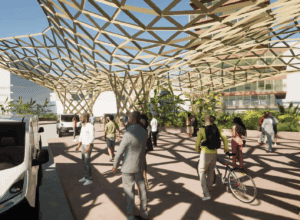
    DASUDA partners MOVE Mobility, VE-R, Studio Akeka, Rebel Group), with support of Movares and Prome Consultants redesigned the historic Old Taxi Park into a smart, inclusive transport hub – combining local insight with global expertise. From congestion to connection: discover how mobility, planning, finance, stakeholder involvement and knowledge exchange came together in Uganda’s capital.

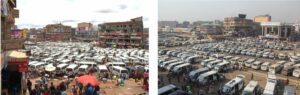
    The Old Taxi Park serves as a central hub for public transportation, mainly for 14-seater minibuses. Due to Kampala’s rapid urban growth and increasing demand for transport, the area suffers from constant congestion and a lack of adequate facilities. The project aims to address these issues by transforming the square into a future-proof central terminal, preserving its cultural value while improving its function in the city’s public transport network.

    The project was built around four main focus areas:

    Mobility: The mobility strategy followed a structured, multi-level approach – from broad vision to detailed design. The team focused on:

    • Optimization of public transport organization, terminals, routes, stops, and schedules
    • Use of advanced tools such as GIS data, the MOVE Meter, and VISSIM simulation software
    • Ensuring livability and practicality at every step of the process.

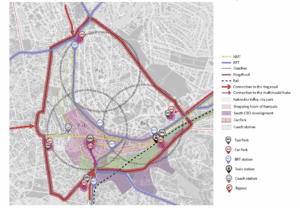
    Multi-modal system at city centre scale     

    Urban Planning: The team understands the site in its broader urban context and identified both constraints and opportunities. Through a stakeholder-oriented design process, various development options were explored and evaluated for feasibility and support.

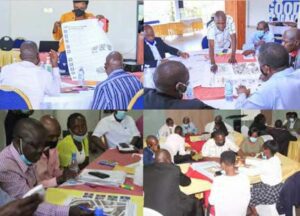
    Engaging stakeholders was a crucial part of the process. Collaboration included landowners, representatives of the taxi sector, vendors, commercial associations, the municipality, government bodies, and decision-makers, all contributing to a broadly supported and feasible solution.

    Financial Strategy: A strategy built on feasibility, bankability, and transit-oriented development.

    Stakeholder involvement and Knowledge Exchange: A “learning by doing” approach was key to the project, which functioned as a living lab:

    • Collaboration within the Stakeholder Platform
    • Core team preparation and evaluation sessions
    • A Knowledge Exchange Week in the Netherlands for sharing knowledge and best practices.

    Stakeholder involvement—from local vendors to government representatives—was essential in shaping a sustainable and future-proof public transport terminal in the heart of Kampala.


  5. MOVE Mobility’s contribution to SUMP Düzce

    Comments Off on MOVE Mobility’s contribution to SUMP Düzce

    Düzce SUMP is special because it is the only non-metropolitan municipality in Türkiye with such a plan, underlining its pioneering spirit in sustainable mobility planning.

    This strategic plan focuses on putting people and their basic needs first, thus contributing to a higher quality of life in the city. The plan is continuously evaluated and adapted to respond to current mobility trends, making it a dynamic and forward-looking tool.


    Modelling with support of the Move Meter

    MOVE Mobility supported the modelling process with our Move Meter tool. We provided training sessions in which participants learned about the operation, functionalities and practical applications of the software. Through interactive sessions, we ensured a better understanding of the traffic model by the local traffic engineers, enabling them to independently substantiate any adjustments to the plans.


    Integrated networks

    The plan takes into account all modes and forms of transport, both motorised and non-motorised. The main networks for public transport, cycling and cars are designed as part of an integrated system rather than separately, through an iterative process. This approach ensures that all transport modes fit together seamlessly.

    EU financiering

    The process of developing and implementing a SUMP is part of developing EU legislation for cities. This project is therefore financed by the EU as part of the process of adapting Turkish legislation in this field to the European standards been applied in many areas across Europe (and worldwide).


  6. Düzce Sustainable Urban Mobility Plan

    Comments Off on Düzce Sustainable Urban Mobility Plan

    Düzce Sustainable Urban Mobility Plan is a strategic plan to meet the mobility needs of citizens and the business environment in order to provide a better quality of life. Düzce SUMP will provide a useful tool for addressing urban transport issues as well as achieving local and higher-level environmental, social, and economic goals. Düzce SUMP will focus on people and how to meet their basic mobility needs in a sustainable way. Besides, it is also needed to include all modes (public, private, passenger, freight, etc.) and forms (motorized and non-motorized) of transport. In addition, it will be constantly monitored as a dynamic plan and updated with common sense to convert current mobility trends into sustainable trends.

    Düzce SUMP is unique in Türkiye, as Düzce is the only non-metropolitan municipality in the country undertaking a SUMP, showcasing its pioneering spirit in urban mobility planning.

    Kick-off meeting

    The kick-off meeting of the Düzce Sustainable Urban Mobility Plan (SUMP) Project, financed by the European Union and the Republic of Türkiye took place on October 9, 2023. Authority for the project is the T.R. Ministry of Transport and Infrastructure, and the end recipient is Düzce Municipality.

    A total of 31 individuals took part in the meeting. Representatives from various organizations, including the Ministry of Transport and Infrastructure, the European Union Delegation to Türkiye, Düzce Municipality, Sistem Global, WRI Türkiye, LuxMobility, Palye Teknoloji, Goudappel, and the Technical Assistance Team (TAT).

    Opening Ceremony

    The opening ceremony of the Düzce Sustainable Urban Mobility Plan (SUMP) Project, implemented under the Transport Sectoral Operational Programme in the second period of the EU’s Instrument for Pre-Accession Assistance (IPA), was held on 8 January 2024 in Düzce. The event brought together key stakeholders, including representatives from the Ministry of Transport and Infrastructure, the EU Delegation to Türkiye, and local authorities.

    During the ceremony, the importance of urban mobility planning for sustainable development and disaster resilience was highlighted. It was emphasized that Düzce serves as an exemplary model for other cities in Türkiye with its approach to sustainable urban mobility.

    The event featured presentations and discussions on the main components of sustainable urban mobility plans, their application to Düzce, and the integration of economic, urban, and mobility planning. Experts shared insights on road safety, smart city technologies, and digital solutions to enhance urban transport systems.

    During the opening ceremony, MOVE Mobility participated in the panel session Urban & Mobility Planning for Sustainable Future of Düzce: Reflections from Experts.


  7. MOVE Mobility contributed to the Green City Kigali Master Plan

    Comments Off on MOVE Mobility contributed to the Green City Kigali Master Plan

    MOVE Mobility, as a key mobility expert within the consortium, played an essential role in validating the master plan and designing the pilot phase. A challenging task considering the natural topography of Kinyinya Hill with slopes of 1:4 to 1:8.  The plan creates a network of accessible streets slicing diagonally across the hill of 1:12 gradients.

    The City of Kigali’s Green City Kigali Concept Master Plan for Kinyinya Hill represents a significant commitment to fostering sustainable urban development in Rwanda’s capital. This initiative aims to create an inclusive, affordable, and environmentally friendly urban space, aligning with the broader Kigali Master Plan 2050. The plan is structured around four foundational pillars: affordable and socially equitable development, climate change adaptation and mitigation, resource efficiency, and culturally sensitive urban development. It is based on the existing Kigali Master Plan 2050 and outlines the rationale for the creation of a green city.

    A first stage project on a 16-hectare site will be implemented by the Green City Kigali Company and will be composed of a mixed-use neighbourhood that integrates affordable housing, shops, public spaces, and efficient public transport. The remaining area will include essential infrastructure such as roads, blue and green networks, business centres, schools, hospitals, and other vital facilities that will improve the lives of the Kinyinya community without requiring relocation. Construction developments will be required to comply with the regulations of the master plan to achieve a sustainable and climate-resilient city.

    The development process heavily involved community engagement, with extensive consultations held in late 2023. Topics covered included public transport (BRT), walking and cycling, and the expected growth of the private car. What are the ideas of the community about connecting neighborhoods with different modes of transportation and with what kind of roads? What does the community view as their priority and how should the interventions be phased?

    This participation was crucial in refining the master plan, leading to enhancements such as improved road alignments and the establishment of non-motorized routes for better connectivity. Zoning regulations were also adjusted to promote higher density and mixed-use neighbourhoods, facilitating a more integrated community environment.

    The BRT backbone through the whole area is combined with a high-quality cycling network. Dedicated cycling lanes include lanes along collectors and the BRT itself, for example. Another design challenge is comfortable and safe cycling infrastructure as part of the arterials.

    We have used our tool Move Meter to develop and visualize the networks for all modes in 2022 and 2035.

    At the end of this year, we will continue with the second phase of the project.


  8. E-mobility Plan for Rwanda

    Comments Off on E-mobility Plan for Rwanda

    The transition to electric mobility is a promising global strategy for decarbonizing the transport sector. This sector plays a critical role in the development and functionality of a city, especially in capital cities that serve as hubs for the transport of goods and people. Today, cities produce more than 60% of greenhouse gas emissions. Rwandan cities aim to go green with a green transport with focus on electric mobility. An accessible and robust network of electric vehicle (EV) infrastructure is an essential pre-requisite to achieve this ambition.

    Rwanda, also called ‘The land of 1000 hills’ is expected to have 16.9 million inhabitants by 2032. Over 400 people will then live per square kilometre. Currently, NMT (walking and cycling) is by far the most common mode of transport, especially in Kigali and the secondary cities.

    The transport networks in Rwanda consist of streets, roads and trails. Forms of rail transport have not (yet) been chosen. NMT is the most common mode of transport in urban areas (more than 50%). Public transport also has a significant share, and car ownership (and hence use) is rising.

    In the capital Kigali, the modal split is as follows:

    The 16% share of motorbikes (boda bodas) is striking, despite the limited capacity of one passenger/vehicle. Due to this low capacity, motorbikes represent more than half of the numbers of vehicles on the roads and streets.

    The introduction of BRT (bus rapid transit) routes, among others, and the continued growth of car ownership and car use will virtually eliminate the boda boda system within now and 15 years. Many of the boda boda drivers will become part of the (new) public transport system.

    According to the Kigali Master Plan, the modal split for Kigali in 2035 will look as follows:

    For secondary cities, a similar shift in the modal split will occur.

    Clearly, the E-mobility Plan for Rwanda and hardware realisation should be based on modal split figures for the future.

    Many locations are already fixed, such as

    • Central places/squares for public transport in all cities
    • In Kigali many central locations such as car parks for employees
    • Secondary cities all have 1 or 2 central places for public transport; bus stations and sleeping places (terminals)

    Early planning of e-vehicle charging is necessary to avoid chaos in both energy and traffic and transport in cities and towns. Designing (and implementing) EV charging infrastructure is mainly a technical task. At the same time, Rwanda is moving towards sustainable mobility. Therefore, it is crucial that both perspectives are taken into account. In other words, integrated planning is needed.

    Some comments to motivate this approach:

    The boda bodas have been mentioned earlier. They will decrease in number due to good public transport and e-bikes. Still, the switch to electricity is going fast:

    • Petrol engine blocks are being replaced by e-engines in large numbers
    • Exchange stations for swapping batteries are growing steadily

    E-bikes are hardly seen in Rwanda these days. Especially in Kigali and the other cities, they will be a game changer. The ‘modern’ e-bikes like the one shown are so powerful that you can even pedal up steep hills.

    These e-bikes are too expensive for a large part of the population; a creative way of financing could speed up this process. For example, the purchase of a new house includes an e-bike.

    Public transport in Kigali and other cities must improve to compete with bodas and cars. Electrification of buses should include larger buses (for BRT; bus rapid transit); now the first e-buses to enter the country are small buses.

    Finally: This article should not be seen in the sense of ‘everything goes wrong’. On the contrary! Rwanda is working hard on all issues (planning and engineering) to make it a Smart Moving Country!


  9. E-bikes, a step towards a sustainable mobility system in Africa

    Comments Off on E-bikes, a step towards a sustainable mobility system in Africa

    More and more of our projects in Africa focus on e-mobility.  Electric-mobility (E-mobility), or electrification of transport, stands out amongst the most promising emerging disruptive technologies at the interface of the clean energy transition and sustainable transportation. It creates opportunities to mitigate climate change, enhance energy efficiency and the quality of transport services, and improve urban air quality.

    The e-bike is starting to become popular since e-bicycles are accessible and affordable alternatives to motorbikes. They are also the most efficient vehicle for last mile deliveries and a proven solution for logistics and commute across the world. Additionally, charging them is as fast, easy and affordable as charging a phone.

    Manufacturers are trying to expand their market by also looking at mountainous (hilly) countries. Currently, a prototype of an e-bike with an extra powerful motor is riding around in Kigali and its surroundings, and in Kampala.

    During recent visits to Uganda and Rwanda, Tonny Bosch visited eBee, a pan-African e-mobility company.  The company was founded in late 2021 in Kenya and is now operational with electric bicycles in Kenya, Uganda and Rwanda. They sell and rent their e-bicycles and also operate a fleet of last mile delivery riders, creating green jobs for women and youth.

    In short, a good step towards a sustainable mobility system.

  10. Tonny Bosch shares Dutch knowledge in EU Mobility Week in Tbilisi

    Comments Off on Tonny Bosch shares Dutch knowledge in EU Mobility Week in Tbilisi

    Tbilisi has ambitious plans to improve urban mobility. We are proud to have been able to inspire the City of Tbilisi and students of the International Summer School.

    At the invitation of the Dutch Embassy in Tbilisi, Tonny Bosch shared knowledge about the Dutch approach to better urban mobility and cycling, as part of the EU Mobility Week 2023 in Tbilisi. Several disciplines from the municipality of Tbilisi were represented, as well as the University of Kassel and the city of Leipzig. MOVE Mobility was welcomed by the mayor of the city of Tbilisi and the Dutch Ambassador for Georgia, Mrs Meline Arakelian.

    Together we can make Tbilisi a smart moving sustainable city!

  11. We are working on a smart moving Green City Kigali

    Comments Off on We are working on a smart moving Green City Kigali

    We have been hired as mobility experts and are engaged in validating the results of the Master Plan, and providing detailed designs for the pilot phase. Our purpose is to enable the sustainable expansion of urban Kigali; Smart Moving Kigali so to say.

    The goal of the project is to create a model community in Kigali that demonstrates and establishes a new national and regional standard for sustainable urban development by promoting urban resilience and affordable housing. Building green is “a necessity, not a luxury” and it will feature a range of initiatives, including the use renewable energy, rainwater harvesting, wastewater management, recycling and reuse of water and sustainable transport solutions. The development will provide much-needed quality housing for low- to moderate-income people.

    The project site is located on Kinyinya Hill in the northeastern part of Kigali’s central business district and covers an area of about 600 hectares. The pilot phase of the project is 16 hectares.

    Together with the local team of FBW we began the project with communication sessions on “Mobility”. Topics covered included public transport (BRT), walking and cycling, and the expected growth of the private car. What are the ideas of the community about connecting neighborhoods with different modes of transportation and with what kind of roads? What does the community view as their priority and how should the interventions be phased?

  12. Old Taxi Park in Kampala reopened

    Comments Off on Old Taxi Park in Kampala reopened

    The park was refurbished and thanks to traffic management and markings, a “full is full” strategy was designed and implemented by KCCA.

    This was preceded by extensive stakeholder engagement led by DASUDA and MOVE Mobility. During a number of sessions with all involved stakeholders, the key priorities that emerged from the analysis of the area were discussed and the most needed functions and programmatic additions were investigated.

    Reopening the Old Taxi Park is another step forward in the transition of the OTP towards becoming a multi-modal hub.


  13. The Urban Area of Ramallah-AlBireh is well on its way to making mobility sustainable

    Comments Off on The Urban Area of Ramallah-AlBireh is well on its way to making mobility sustainable

    To realize a complete SUMP status, four topics need further attention: 1) Detailed parking and pedestrian study; 2) Detailed design of the Master Plan outcome (corridors, terminals, bus stops, bus lines, etc.; 3) Car circulation study; 4) Detailed feasibility study (financial/ social/environmental).

    Together with our partners, we will soon meet ministers and mayors involved, and various potential funders to discuss finalization of the plan process. The area suffers from high traffic congestion, existing roadway network in a highly built environment, no room for expansion, increasing auto ownership, increasing commercial activities, limited parking space and not enough space for pedestrians, small capacity public transportation vehicles, poor public transport management, etc.

    Multi-modal Hub

    Quality of Urban Space

    Integration between corridor line & other internal lines

    The area is well on the way to improving this situation, also thanks to Dutch planning expertise.

  14. Final stage of development of Public Transportation Master Plan for Ramallah-AlBireh Urban area

    Comments Off on Final stage of development of Public Transportation Master Plan for Ramallah-AlBireh Urban area

    The project intends to respond to the needs of growing population and private sector for more sustainably and efficiently planned urban spaces and infrastructure. The proposed Master Plan will cover the urban area of Ramallah, AlBireh, Betunia, and Surda Abu-Qush. This area constitutes the major urban center of Ramallah-AlBireh Governorate and is located at the heart of the West Bank. Ramallah and AlBireh cities host most of the headquarters of the ministries and other national institutions and the offices of international agencies working in Palestine.

    The area witnessed considerable socio-economic and urban growth during the period following the establishment of the Palestinian National Authority in 1994, where thousands of Palestinians moved to the area.. The rapid increase in population, as well as in vehicle ownership, and economic activities in the area have considerably increased vehicular traffic and as a result the area has high congestion. Traffic conditions have worsened despite the fact that the municipalities have implemented several road rehabilitation projects and traffic improvements in the last few year.

    Together with our consortium partners Community Development Group (CDG) and National Center for Sustainable Development (NCD) we have successfully finalized the Inception phase, Data Collection, Analysis and Modeling phase. We now focus on the final stage: The Master Plan. Within a few weeks the final Comprehensive Master Plan will be finished and the proposed measures will be ready for Implementation.

    The project is funded by Municipal Development & Lending Fund (MDLF) and is part of the Integrated Cities and Urban Development Project (ICUD).

  15. Restructuring of the Old Taxi Park in Kampala gets going!

    Comments Off on Restructuring of the Old Taxi Park in Kampala gets going!

    The High Level Committee kick-off meeting on 11th February about the feasibility study of the Redevelopment of OTP was followed by a Stakeholders platform meeting on 10th and 11th of March. Present were the Executive Director of Kampala Capital City Authority (KCCA) and directors of different KCCA departments like Physical  Planning), representatives of different Ministries, Real Estate, Union of drivers, Market sellers, et cetera as well as the Dutch consultants including MOVE Mobility. During this meeting the preliminary findings on history,  spatial structure and qualities were presented. In separate SWOT analysis work sessions the participants focused on six themes.

    To be continued, one year to go!

  16. Cycling Master Plan for Smart Moving Mumbai!

    Comments Off on Cycling Master Plan for Smart Moving Mumbai!

    Recently our Indian partner Smart Commute Foundation had a brief opportunity to meet Supriya Sule, Member of Parliament and Municipal Commissioner,  MCGM Iqbal Singh Chahal, and they discussed our intention and wishes with the Mayor of Mumbai. We emphasized the need to create & implement a Master Plan for cycling. An effective master plan takes into account all modes of transport, needs of all sections of society and various other factors in order to come up with an integrated infrastructure network for the city. To achieve this we need the support of support of local residents, officials & politicians.


  17. Transport and Mobility Strategy for the conurbation of Bethlehem

    Comments Off on Transport and Mobility Strategy for the conurbation of Bethlehem

    The different aspects of Bethlehem conurbation’s transport planning were analysed in an interdisciplinary manner, and current and future trends were studied related to road networks, car use, parking, public transport, non-motorised transport, city logistics and tourism. This resulted is a shortlist of 39 projects to be implemented during the timeline of the project, between 2020 and 2030.

    The 39 projects were discussed with stakeholders during several sessions with the client representative from Bethlehem Municipality and several important actors from Bethlehem, Beit Sahour, Beit Jala, Al Doha and Al Khader municipalities, MoLG and Traffic Police.

    Co-creation, participation and an interactive dialogue between all stakeholders have guided the whole planning process, therefore the public acceptance and legitimacy of this plan were ensured. There was also a project steering committee that included representatives of the administration at different levels (national, regional and local) and decision makers, which was consulted on an ongoing basis. This cooperation contributed significantly to the high quality of the study.

    This final report does not conclude the work that needs to be done, in fact it represents the first step of a long and exciting process in which Bethlehem conurbation has embarked. Mobility planning in Bethlehem conurbation is and will be a work in progress and a dynamic process. The measures must be concretised and verified. In this way, the plan and the projects will be continually updated so as to be able to react to future developments.

    Watch the movie:

    https://www.facebook.com/watch/?v=267844058319848

  18. “Schalkwijk verbindt!”

    Comments Off on “Schalkwijk verbindt!”

    In “Schalkwijk verbindt!” we show how to steer a positive shift from ‘coming and going to and from the neighbourhood’, with the emphasis on the car, to ‘moving within the neighbourhood’, with the emphasis on cycling, quality of public space and public transport.

    The proposal was part of the three finalists for the Panorama Lokaal for this location organized by the Governmental Advisors of Spatial Quality of the Netherlands together with the Municipality of Haarlem and Pré Wonen housing corporation. The aim of the competition was to propose innovative as well as feasible ways of enhancing the urban qualities of this city edge.
    In “Schalkwijk verbindt!” we proposed a positive shift from large-scale infrastructure to an inclusive place for all and by all residents of the neighborhood; a space for people.

    Our project “Schalkwijk verbindt!” was on display in the exhibition of ABC Architectuurcentrum Haarlem for the ‘Waddenbuurt’ in Schalkwijk, Haarlem.


  19. Rethink city planning and mobility in Africa

    Comments Off on Rethink city planning and mobility in Africa

    Car-centric African cities challenged by the effects of rapid urbanization are facing daily traffic congestion, air pollution and transportation challenges and Amanda, bicycling enthusiast, urban planner, and lecturer at Makerere University in Kampala, Uganda is passionate about the solutions that lie in alternative modes of transport.

    While Africa is still a green continent, Amanda believes that by design we are at a risk of losing the green and that it’s time for tough decisions to be made regarding the mobility issues affecting everyone in cities.


  20. Stadtquartier Am alten Güterbahnhof in Duisburg

    Comments Off on Stadtquartier Am alten Güterbahnhof in Duisburg

    Together with our partners MLAplus, LOLA, Bureau Stadsnatuur and FABRICations we have started this interesting project by exploring the area which is sandwiched between rail and motorway, right next to the Central Station.

  21. City of Düsseldorf – Active Mobility for the Mobilitätsplan 2030

    Comments Off on City of Düsseldorf – Active Mobility for the Mobilitätsplan 2030

    The City of Düsseldorf, capital of North Rhine-Westphalia has already achieved a great deal in terms of road space as well as bicycle and foot traffic. However, the infrastructure needs to be further developed in order to cope with the increasing commuter flows into the city with sustainable mobility. The city now wants to focus on international expertise to achieve ambitious goals in terms of growth, quality of life and accessibility.

    The assignment includes planning for cycling, walking, traffic safety and street design. Over the past 50 years Goudappel and MOVE Mobility have developed an integral approach to plan for mobility which will be applied in this assignment. The inherent connection between traffic safety, good cycling and walking infrastructure, and integrated street design will be the basis to work out a plan for Active Mobility that makes the City more liveable, accessible and safe for all its citizens and visitors alike.

  22. 1st prize for “Cycologic”: a film about changing the world one bicycle at a time

    Comments Off on 1st prize for “Cycologic”: a film about changing the world one bicycle at a time

    The film makers: “As part of our studies, we went to Uganda for two months to make our final film project. We were certain that we wanted to do an inspiring and hopeful film showing a modern Uganda rather than highlighting the negative aspects that so often takes too much space in every media platform.”

    The film is about Amanda Ngabirano’s tireless journey to make Uganda more bicycle-friendly. All film entries were judged by a panel of esteemed urbanists, architects and filmmakers.

    Amanda Ngabirano, director MOVE Mobility Africa, is an active member of the World Cycling Alliance Steering Board, an urban planner, a lecturer and a passionate cycling advocate. Her work has been featured in leading Ugandan media outlets. To view the trailer please click on the link.

    https://www.youtube.com/watch?v=70rt0YKDaDI

    After a thorough preparation period the first pilot cycling route in Kampala has now been realized!

  23. Public Transportation Master Plan for the Urban Center of Ramallah and Al Bireh

    Comments Off on Public Transportation Master Plan for the Urban Center of Ramallah and Al Bireh

    Last week we signed the contract for a Comprehensive Public Transportation Master Plan for the Urban Center of Ramallah and Al Bireh. We have started working on the Inception report together with our consortium partners Community Development Group (CDG) and National Center for Sustainable Development (NCD). The project is funded by Municipal Development & Lending Fund (MDLF) and is part of the Integrated Cities and Urban Development Project (ICUD).

  24. Turkey intends to reach a cycling inclusive society

    Comments Off on Turkey intends to reach a cycling inclusive society

    On August 27, at the office of DCE, we presented our experience in mobility/cycling planning for a delegation from the Turkish Ministry of Environment & Urbanization. We shared tour knowledge and experiences in promoting and increasing cycling in cities around the world.

    We look forward to contributing to making Turkey a cycling country!

  25. Citylab housing conference in Sulaimani

    Comments Off on Citylab housing conference in Sulaimani

    The conference was about city centres and more specifically the preservation of the old (historical) houses/buildings. The Sulaimani case study was done by volunteers. View Pioneer presented a Masterplan including Urban and Mobility Planning. More than 300 persons attended the conference. Among them civil servants from seven municipalities and regional as well as national level.

    Tonny Bosch was interviewed by Kurdistan television. He spoke about the similarity between Dutch cities in the 1960s and Kurdish cities in the 1990s, and mentioned his hometown Deventer as an example.

  26. Park+Bike in Province of Noord-Holland

    Comments Off on Park+Bike in Province of Noord-Holland

    The Province of Noord-Holland has created a document describing the future of the bicycle in Noord-Holland Province. Strengthening chain movements, utilizing the opportunities of bike sharing, and Smart Mobility are important topics. Ultimately, a product must be created that makes it attractive for a large group of bikers to park at a distance.

    MOVE Mobility has been commissioned to implement the P+Bike concept and to test it at the European Road Cycling Championships. If this concept will prove to be successful the province of Noord-Holland and the city of Alkmaar will want to use this concept at many more temporary events. In particular, the P+Bike concept could be one of the sustainable accessibility solutions around the Grand Prix Formula I, which will be held in May 2020. In addition, MOVE Mobility will show to what extent P+Bike could work to capture traffic on the outskirts of the city that will have to continue by bike, such as commuters and shoppers.

  27. MOVE Mobility presents for a high-level delegation from Peru

    Comments Off on MOVE Mobility presents for a high-level delegation from Peru

    Last week, at the office of the Dutch Cycling Embassy in Delft, Ruxandra gave a presentation and discussed with a high-level delegation from Peru. The delegation consisted of representatives – mayors and civil servants involved in urban planning and development – of several municipalities in the northern part of Lima Province: Santa Rosa, Comas, Ancón and Puente Piedra.

    The topics discussed were related to integrated transport and mobility planning in general and the promotion of cycling, in particular. Further, the challenges that these municipalities are facing in terms of congestion, pollution and health have been analysed.

    Ruxandra presented and discussed the importance of combining good infrastructure with efficient governance and a strong education programme in order to ensure the development of a sustainable, reliable and people-centred transport system. The analysis of the traffic in Bogotá performed with our MOVE Meter tool was shown as a good practice for cycling and transport planning.

  28. Reyhan Safari inspires students in Istanbul

    Comments Off on Reyhan Safari inspires students in Istanbul

    As part of this curriculum, students are encouraged to follow design-thinking steps to develop solutions to real-life problems they have identified in their city related to urban mobility, which culminated in a Project Showcase.

    On 14th April participants gathered at Robert College for a Youth Summit, where Reyhan Safari introduced the framework of Smart Moving Cities, and inspired them to think about how they could play a role in improving the accessibility, livability, safety, and economic vitality of their own city.

    The following day, the Project Showcase took place at the Consulate General of the Netherlands in Istanbul where Reyhan consulted with students, providing feedback on the viability and creativity of their projects. Following her valuable perspective, these students are now wrapping up their projects, which will be submitted shortly, with the winners announced in the following days.


  29. Carolina Ramos keynote speaker at the “Congreso Movilidad Futura”

    Comments Off on Carolina Ramos keynote speaker at the “Congreso Movilidad Futura”

    Carolina has been invited as a keynote speaker at the “Congreso Movilidad Futura” in Medellín. She presented the Dutch experience in micromobility as a service and how it can be applicable for cities in Colombia. We hope we can keep sharing our knowledge and mixing the “best of both worlds” on more mobility trending topics!